


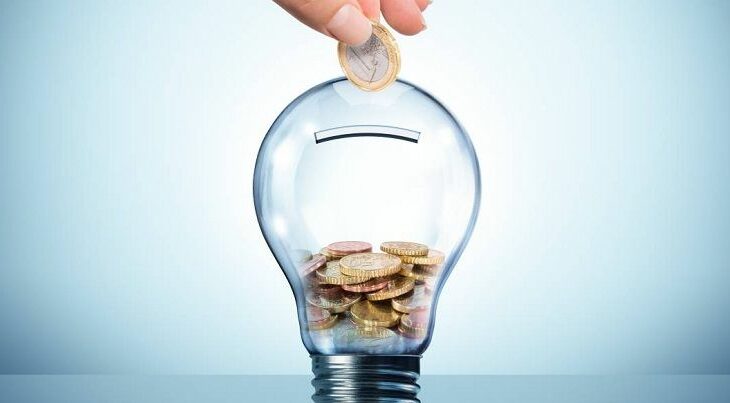
Last call: the solar panel tax deduction for homes ends on 31 December 2026
To deduct your installation from Spanish income tax (IRPF), three things must be done before the end of 2026:
- The installation, finished.
- Everything paid by card, bank transfer, nominative cheque or bank deposit (never in cash).
- The post-works energy performance certificate, already issued (for the new 10% deduction, the installation’s electrical certificate, CIE).
Only works on a whole residential building have until 31 December 2027.
Updated on 12 November 2026.
In 2026 you can deduct between 10% and 40% of what you pay to install solar panels in your home from your income tax, and up to 60% if the works cover a whole residential building. For a main home, the 40% deduction lets you recover up to €3,000 per taxpayer.
Whether you are looking into installing solar panels in Marbella or anywhere else in Andalusia, here are the requirements, the deadlines and a worked example.
What income tax deductions are there in 2026 for installing solar panels?
There are two kinds: the deductions for works that improve a home’s energy efficiency (20%, 40% and 60%) and a new 2026 deduction for renewable self-consumption (10% or 20%). Each installation can only claim one of them, and all of them come off the state portion of your income tax. They are only available to Spanish tax residents.
40% deduction
– For your main home or a home you own and rent out (or rent out before 31/12/2027).
– Requires cutting non-renewable primary energy consumption by at least 30% or reaching an A or B rating.
– Maximum base of €7,500 a year (up to €3,000 deducted).
– Works and payments by 31/12/2026.
20% deduction
– For the same types of home as the 40% deduction.
– Requires cutting heating and cooling demand by at least 7%.
– Maximum base of €5,000 a year (up to €1,000 deducted).
– Works and payments by 31/12/2026.
60% deduction
– For works on a whole residential building: a complete block or a single-family house.
– Requires cutting the building’s consumption by 30% or reaching an A or B rating.
– Base of €5,000 a year, up to €15,000 in total.
– Payments by 31/12/2027.
For solar panels, the requirement usually assessed is the one for the 40% deduction. Whether you meet it depends on each home, and only the energy performance certificates issued before and after the works can prove it.
New in 2026: 10% or 20% deduction for self-consumption
Royal Decree-law 7/2026 created a deduction for renewable electricity self-consumption systems, such as solar panels, batteries included:
- 10% for a property you own, or 20% if the system is installed in the residential building where your home is.
- Maximum base of €5,000 a year (up to €500 or €1,000 deducted).
- No energy performance certificates required, but you do need the electrical installation certificate (CIE).
- Installation finished and paid for in 2026.
It is the alternative if your home doesn’t reach the improvement the other deductions require, or if you didn’t get the certificate before starting. None of these deductions apply if the installation is used for a business activity.
What must be done before 31 December 2026?
The works, the payment and the post-works energy certificate. Signing the quote or paying a deposit is not enough. For the 20% and 40% deductions:
- Pre-works energy certificate, before you start. One issued in the previous two years is valid; one issued afterwards is not.
- Installation finished and paid through the bank by 31/12/2026.
- Post-works certificate issued before 1 January 2027.
- Both certificates registered in the regional register, as required by Royal Decree 390/2021. According to the Tax Agency, the post-works certificate can be registered later, but the deduction cannot be applied until it is; and if the pre-works one is not registered in time, the deduction is lost.
If you haven’t started yet, ask for your study as soon as possible: the pre-works certificate, the installation and the post-works certificate all have to fit in before the end of the year.
What costs can you include in the deduction?
Everything needed for the installation, minus any subsidized amount:
- Solar panels, inverter, mounting structure and monitoring
- Labor
- Technical project, professional fees and site supervision
- Energy certificates (before and after the works)
Equipment that uses fossil fuels doesn’t count, and for the 20% and 40% deductions neither do works on garages, storage rooms, gardens or swimming pools. Keep your invoices and bank payment receipts.
Installing solar panels in Marbella: a tax and energy opportunity
Installing solar panels in Marbella is especially profitable thanks to the many hours of sunshine a year, which speed up the return on investment. In Marbella and across the province of Málaga, self-consumption helps you:
- Cut your electricity bill.
- Protect yourself against rising electricity prices.
- Increase the value of your home.
If you are also replacing your boiler with an air-source heat pump, those works can also qualify for the 20%, 40% or 60% deductions if the certificates prove the improvement. The new 10% deduction, however, only covers electricity self-consumption.
How much can you get back? Example with a typical installation
For a main home, up to €3,000 per taxpayer with the 40% deduction, or up to €500 with the new 10% one. Here is an indicative example with round figures (not a quote):
€7,000 solar panel installation in a main home in Málaga, paid by bank transfer, with no subsidy:
If you qualify for 40%: you deduct €2,800.
Real cost after the deduction: €4,200.
If you only qualify for 10%: you deduct €500.
Details that change the figure:
- Caps. The 40% is calculated on a maximum of €7,500: with a €10,000 installation you get back €3,000, not €4,000. The 10% is capped at a €5,000 base.
- Subsidies. They are subtracted: with €1,000 of aid, the 40% applies to €6,000 (€2,400).
- Your tax bill. The deduction comes off the state portion of your income tax; if you pay little tax, you may not be able to use all of it.
- Single-family house. If the works qualify for the 60% deduction, that €7,000 would give €4,200: €3,000 in the first year (€5,000 maximum base) and €1,200 the following year.
On top of the deduction come the savings on your electricity bill. We explain how many years it takes for solar panels to pay for themselves and their real return.
What happens if I install in 2027?
Under the rules in force on 12 November 2026, an installation in your home finished in 2027 would get no income tax deduction. The 20% and 40% deductions and the new 10% one end on 31 December 2026, and no extension has been approved or officially announced.
- The 60% deduction continues for works on a whole residential building paid by 31/12/2027, with the certificate issued before 1/1/2028.
- Extensions are not guaranteed. The one covering 2025 and 2026 was not approved until March 2026, after Congress rejected two earlier decrees.
- The savings on your bill are still there. Without the deduction, the installation just takes a little longer to pay for itself.
Frequently asked questions about the income tax deduction for solar panels
Until when can I deduct solar panels on my tax return?
For homes, until 31 December 2026, with the installation finished and paid and the post-works certificate issued. For works on a whole residential building, until 31 December 2027.
How much can I deduct for installing solar panels at home?
40%, up to €3,000, if the certificates prove the improvement. If not, 10%, up to €500. For residential buildings, up to 60%.
Do I need energy certificates?
For the 20%, 40% and 60% deductions, yes: one before and one after the works, both registered. The new 10% deduction doesn’t require them, but you need the CIE.
In which tax return is it applied?
In the return for the year the post-works certificate is issued (20% and 40%) or the year the installation is finished (10%). For 2026, in the return filed in 2027.
Can I claim it if I am not a Spanish tax resident?
No. These deductions belong to Spanish personal income tax (IRPF), whose taxpayers are people with their habitual residence in Spain: as a general rule, those who spend more than 183 days a year here or have their main economic interests here. If you are not tax resident, check your situation with your tax adviser.
Is it compatible with a subsidy?
Yes, but the subsidized amount is subtracted from the deduction base.
Can I combine the 40% and 10% deductions for the same installation?
No. Each installation can only claim one of them.
Does it apply to a second home?
The 20% and 40% deductions don’t: they are for your main home or a rented home. The new 10% deduction applies to properties you own without requiring them to be your main home, and the 60% one covers second homes, according to the Tax Agency.
What if I also install an EV charging point?
It has its own 15% deduction (maximum base of €4,000 a year) if the installation is finished in 2026. How to combine it with the others is something to check with your tax adviser.
Official sources
This article summarizes the rules in force on 12 November 2026 and is not tax advice. For your specific case, check with your tax adviser or the Spanish Tax Agency (Agencia Tributaria). All sources are in Spanish.
- Personal Income Tax Act (Ley 35/2006): articles 8 and 9 and additional provisions 50 and 62 (BOE, consolidated text)
- Royal Decree-law 7/2026 of 20 March (BOE)
- Spanish Tax Agency: 2026 income tax changes
- Spanish Tax Agency: energy refurbishment of buildings
If you are thinking about taking the step towards self-consumption and want to make the 2026 deduction, leave yourself enough time.
We take care of the entire process:
✔️ Personalized savings study
✔️ Solar panel installation design
✔️ Energy performance certificate management
✔️ Advice on applying for the Personal Income Tax (IRPF) deduction for solar panels 2026
✔️ Income tax processing and support
We work throughout Andalusia and the Region of Murcia, with solutions tailored to each home. Discover our solar panels service.
Request your free assessment
Find out how much you can save with solar panels and how much you can get back on your income tax return.
Related posts
Personal income tax deduction for installing charging points in 2026 – Complete guide
In 2026, the Government of Spain has extended the 15% tax deduction in Personal Income Tax (IRPF) not…
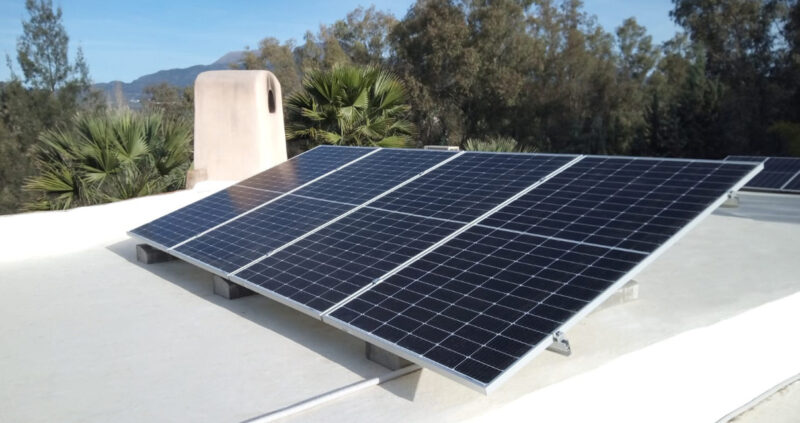
New Subsidies for Solar Panels in 2025: Boost for Energy Self-Consumption in Spain
Madrid, January 27, 2025 – The Government, in its commitment to sustainability and the energy transition, has announced…

Tax Increase in January 2025: A Change that Will Impact Spanish Taxpayers
Madrid, January 24, 2025 – The Spanish government has approved a tax increase that came into effect this…