


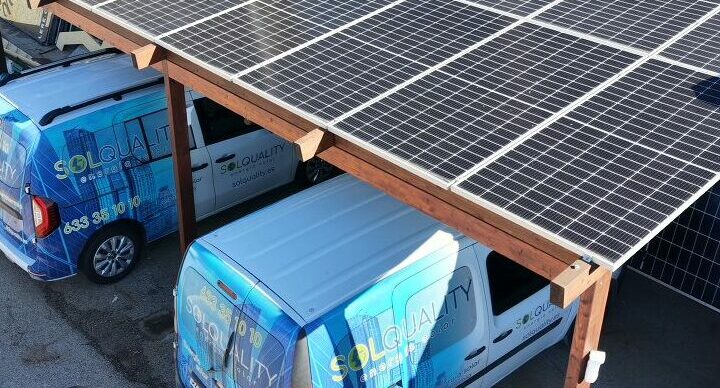
Solar self-consumption has established itself in Spain as one of the most efficient, sustainable and profitable energy solutions for both homes and companies. In 2026, interest in installing solar panels continues to grow, driven by the increase in the price of electricity, the improvement of photovoltaic technology and the existence of public subsidies and aid.
In this complete guide we explain what solar self-consumption is, what types of installations exist, what subsidies are available in 2026 and how to calculate the return on investment, so you can make an informed decision adapted to your needs.
What is solar self-consumption?
Solar self-consumption consists of producing your own electricity using photovoltaic solar panels installed in your home or business, consuming that energy directly and reducing dependence on the traditional electrical grid.
The energy generated is used in real time and, if more is produced than is consumed, it can:
- Discharge into the electrical grid and receive compensation
- Store in batteries for later use
The result is a significant reduction in the electricity bill, greater energy independence and a clear contribution to caring for the environment.
Types of self-consumption facilities in 2026
1. Self-consumption without surplus
In this type of installation, the energy produced is consumed entirely in the home or business.
No electricity is discharged into the grid, since an anti-discharge system is installed.
Advantages:
- Simpler processing
- Ideal for profiles with high daytime consumption
- Less administrative complexity
2. Self-consumption with surplus
It is the most common modality currently. It allows energy that is not consumed at the time of production to be injected into the network.
Advantages:
- Full use of solar production
- Economic compensation on the electricity bill
- Greater profitability in the medium and long term
3. Self-consumption with batteries
Includes storage systems that allow solar energy to be saved for use at night or during times of low production.
Advantages:
- Greater energy independence
- Additional savings in hours without sun
- Protection against increases in the price of electricity
In 2026, the cost of batteries continues to reduce, making this option increasingly interesting.
4. Individual and collective self-consumption
- Individual: a single home or business.
- Collective: several homes or businesses share a facility (very common in neighborhood communities).
Collective self-consumption is a great opportunity for residential buildings and urban areas.
Subsidies for solar self-consumption in 2026
Aid for self-consumption continues to be a key factor in promoting the installation of solar panels in Spain.
Main types of aid:
- Regional and state subsidies (European funds and regional programs)
- IBI bonuses, which can reach up to 50% for several years
- Income tax deductions for improvements in energy efficiency
- Bonuses in the ICIO (Construction Tax)
 Important: aid varies depending on the year, the autonomous community and the municipality, so it is essential to have professional advice for Don’t miss any opportunity.
How to calculate return on investment (ROI)?
The return on investment indicates the time necessary to recover the money invested in the solar installation.
Factors that influence ROI:
- Total installation cost
- Annual electricity consumption
- Estimated solar production
- Subsidies and bonuses applied
- Electricity price
- Use or not of batteries
Average return in 2026
In most cases:
- Housing: between 3 and 5 years
- Companies: between 2 and 3 years
From that moment on, the energy produced is practically free, generating savings for more than 25 years of the installation’s useful life.
Benefits of solar self-consumption
- Reduction of the electricity bill from day one
- Protection against increases in the price of electricity
- Increase in property value
- Reduction of CO₂ emissions
- Real commitment to sustainability
Solar self-consumption in 2026 is one of the best energy investments that can be made at both a domestic and business level. Thanks to technological evolution, the subsidies available and long-term savings, installing solar panels is today more accessible and profitable than ever.
At Solquality we accompany you throughout the entire process: personalized study, aid management, installation and maintenance, so that you can make the most of all the advantages of solar self-consumption.
 Request your free study and discover how much you can save with solar energy.