


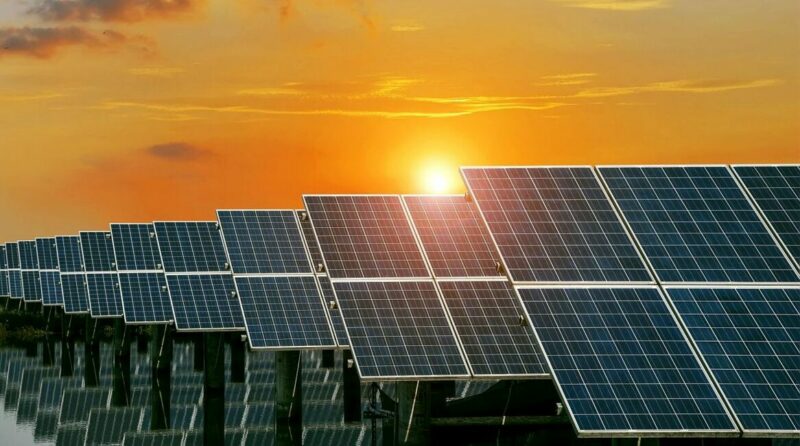
To learn how to choose the ideal solar panels for your home or business, we must first consider that installing solar panels is a long-term investment that can make a significant difference in energy savings, efficiency, and sustainability for a home or business.
However, not all solar panels are the same, and choosing the right option requires understanding the different technologies available, the most reliable brands on the market, and the average performance you can expect in each case.
In this article, we explain how to choose the ideal solar panels, what technologies currently exist, which brands stand out in the photovoltaic sector, and what aspects you should consider to make the right decision.
What are photovoltaic solar panels and how do they work?
Photovoltaic solar panels transform solar radiation into electricity using photovoltaic cells, usually made from silicon. When sunlight strikes these cells, an electrical current is generated that can be used directly in the home or business, stored in batteries, or fed into the electrical grid.
System efficiency depends on both the quality of the panels and their correct installation and sizing.
Most Common Solar Panel Technologies
Monocrystalline Panels
These are currently the most widely used in residential and commercial installations.
Main Characteristics:
Made with high-purity silicon
High efficiency (approx. 20–23%)
Better performance in low solar radiation conditions
Longer lifespan and long-term stability
Ideal when roof space is limited and maximizing production is desired.
Polycrystalline Panels
Although very popular for years, their use has declined.
Characteristics:
Lower efficiency than monocrystalline panels
Require a larger surface area for the same power output
Slightly lower price, although the difference is decreasing
Currently used mainly in very specific projects where space is not an issue.
Bifacial Panels
They capture solar energy from both the front and back.
Main advantages:
Up to 10–20% increase in production under optimal conditions
Especially beneficial for industrial rooftops, ground, or reflective surfaces
Widely used in larger installations
Average power and performance of solar panels
The power of a panel is measured in peak watts (Wp) and represents the maximum energy it can produce under ideal conditions.
Typical power ratings in 2026
Homes: between 400 Wp and 500 Wp per panel
Businesses: from 500 Wp to over 600 Wp per panel
More power doesn’t always mean a better choice. The important thing is to adapt the installation to the actual consumption and the available space.
Leading solar panel brands
The photovoltaic market has many manufacturers, but only a few offer solid warranties, reliability, and good long-term performance.
Reference brands in the sector:
LONGi Solar: a world leader in monocrystalline panels, known for its high efficiency and durability.
Jinko Solar: one of the manufacturers with the highest volume of installations globally, offering excellent value for money.
Canadian Solar: known for its reliability, stability, and wide range of solutions.
AIKO Solar: specializing in high-efficiency technologies and state-of-the-art panels.
JA Solar: excellent performance and consistent long-term production.
Trina Solar: significant investment in innovation and high-power panels.
At Solquality, we work with top-tier manufacturers, selected based on the type of project and the client’s needs.
Which solar panels should you choose for a home?
For a home, the most important factors are:
Available roof space
Annual electricity consumption
Orientation and tilt
Budget
In most homes, high-efficiency monocrystalline panels are the most recommended option, as they allow you to maximize savings even on small roofs.
Which solar panels should you choose for a business?
In commercial installations, other criteria come into play:
High electricity consumption
Intensive use during daylight hours
Large available surface areas
Possibility of installing bifacial panels
Here, the goal is to optimize return on investment and total system production.
Warranty and Durability
A good solar panel should offer:
Product warranty: between 12 and 25 years
Production guarantee: at least 80–85% after 25 years
These guarantees ensure that the installation will remain profitable for decades.
Importance of Good Advice
Choosing solar panels is not just a matter of price. A poor choice can lead to:
Lower than expected production
Slower payback period
Long-term maintenance issues
A personalized study is key to ensuring a successful installation.
Choosing the ideal solar panels for your home or business involves analyzing the technology, power, performance, and manufacturer’s reliability. Opting for quality panels and sound professional advice guarantees an efficient, cost-effective, and long-lasting installation.
At Solquality, we conduct personalized studies to help you choose the best solar solution based on your energy consumption, available space, and savings goals.
Request your free consultation and discover which solar panels best suit your needs.
Related posts

Income tax deduction for solar panel installation 2026 | Guide and requirements
The personal income tax deduction for solar panel installation in 2026remains one of the best opportunities for those…

Energy market trends in Spain
The energy market in Spain has been one of the most relevant topics for households and businesses in…
Personal income tax deduction for installing charging points in 2026 – Complete guide
In 2026, the Government of Spain has extended the 15% tax deduction in Personal Income Tax (IRPF) not…